
Dr Sonia Sassoon is a retired GP, a grandmother, a keen gardener, and a devoted fan of classical music and jazz. She has taken her grandchildren on holidays alone, travels regularly at home and abroad, and rarely misses her Aquafit class. Life, by her own account, is full.
So when a shoulder problem — the legacy of an old door-slam injury and years of gradual wear — finally became unbearable, the thing that frightened her most wasn’t the operation itself. It was the thought of losing, even temporarily, the independence she’d built her whole life around.
A Problem Years in the Making
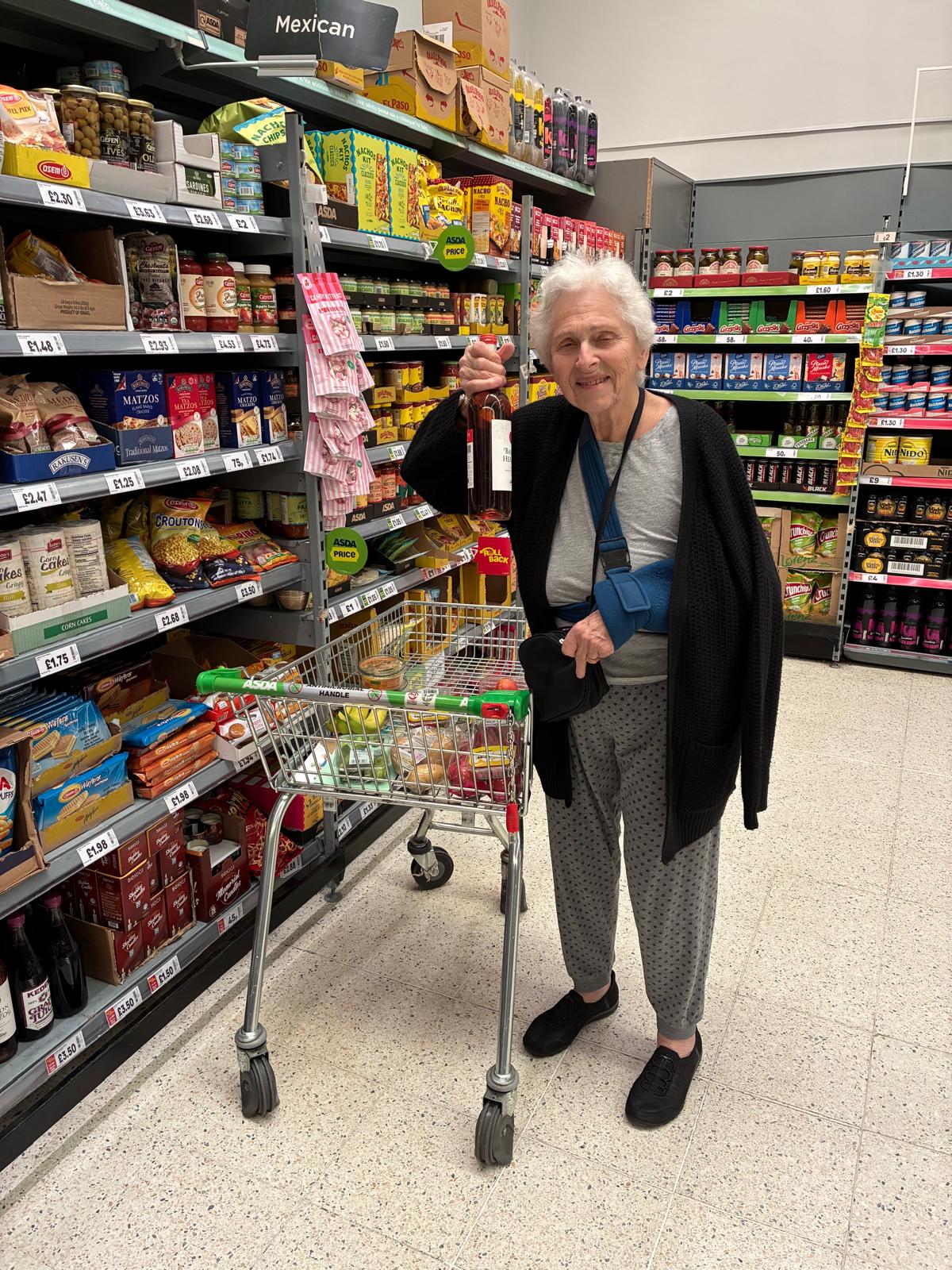
“I think it was a bit of both,” Sonia says, of how the injury started. Many years earlier, her husband had accidentally caught her shoulder with a door. “It didn’t settle down… it just gradually got worse and worse and worse.”
By the time she and her consultant discussed shoulder surgery, a troublesome knee had jumped the queue — “do the knee first, because you won’t be able to manage with a crutch” — so the knee replacement went ahead first, in January, with the shoulder to follow a year later. The wait, and the worsening pain, took its toll. “The pain and there was limitation of movement,” she explains. “I couldn’t lift my arm right up… it became unbearable.”
Her shoulder surgery finally took place in the last week of February this year. “I was in a lot of pain. I was relieved it was going to happen,” she remembers. “I was worried about how I would manage afterwards.”
Life in a Sling
The operation itself went smoothly, helped along by a nerve block that left her arm painlessly numb for a day. But the six weeks that followed, immobilised in a sling, brought a stream of small, humbling challenges Sonia hadn’t anticipated.
“One of the most difficult things was pushing a pill out of a blister pack,” she laughs. Buttons were impossible with one weak hand; bras were out of the question; even getting dressed meant hunting for loose, wraparound clothing she could pull over her head. She couldn’t drive for three months. And there was a quieter cost too. “I didn’t want to see anybody because I felt embarrassed… I was all droopy underneath the sling,” she says. “The isolation was really not being able to go out.”
With her carer Angelica helping twice a day, and a freezer full of home-cooked meals prepared in advance, Sonia managed. But she was determined not to simply wait it out.
Physio at Home, From Day One
Feroz, her physiotherapist from Home Physio Group, was at her door almost as soon as she came home from hospital. Having found home physio invaluable after her knee replacement, Sonia knew exactly how much it would matter this time too.
“I was very impressed,” she says of their first sessions. “He was very friendly, but very respectful… he treated me like I was his family.” What struck her most, though, was that Feroz never treated her as simply an injured shoulder. “He looked at me as not just an arm in a sling, but as a person who has to walk around, who has to get her strength back.”
Early sessions focused on rebuilding general strength and balance — leg raises, mobility work, gentle movement — as much as the shoulder itself. “you need two arms, one each side to walk,” Sonia points out, only half joking, about how disorienting a sling can be. As she progressed, the exercises became more functional and specific: real tasks, in her own kitchen, building back the movements she needed for daily life.
The plan evolved constantly. “I was only doing passive [exercises], and then I was gradually doing active exercises,” she explains. “He was doing less hands-on… because I was doing more.” Once the sling finally came off, resistance bands appeared, tied to her bannister at home, marking a clear new phase in her recovery.
The Small Victories
Progress, Sonia is quick to point out, wasn’t a straight line — it was made of small, specific moments. There was the day she managed to lift the new casserole dish, only to drop and smash its lid reaching into the oven — prompting her grandchildren to buy her an air fryer, which she could lift and install unaided within days. “It was progress towards cooking myself,” she says, “rather than living on packets of things that got boring.”
There was the haircut. Frustrated that she couldn’t yet raise her arm to hold a hairdryer, Sonia had her hair cut very short instead, so all she needed was to fluff it with her good arm. “That helped a lot,” she says. “Emotionally, that was very important, to look nice… that took away the frustration.”
And there was the day she finally walked, alone, to her local Asda with a small shopping trolley. “I felt I was in the real world again,” she says, “because you’re seeing people and you’re talking to people.”
Throughout, Feroz kept a close eye on her state of mind as much as her range of movement. “He kept, he really got into the psychological side of the frustration… that it doesn’t just happen,” she says. “He could pick up on the days I was a bit down as he walked through the door.”
Life Without Pain
Today, the change is one Sonia describes simply as unbelievable. “Before I had it done, every morning I’d wake up thinking, how much more pain am I going to have today. Every morning I wake up now, I have no pain.”
“I can sleep without pain. I can turn over in bed, I can get out of bed, I can lift things, I can drive without pain,” she says. “I don’t have to take the pills that are rotting my guts.”
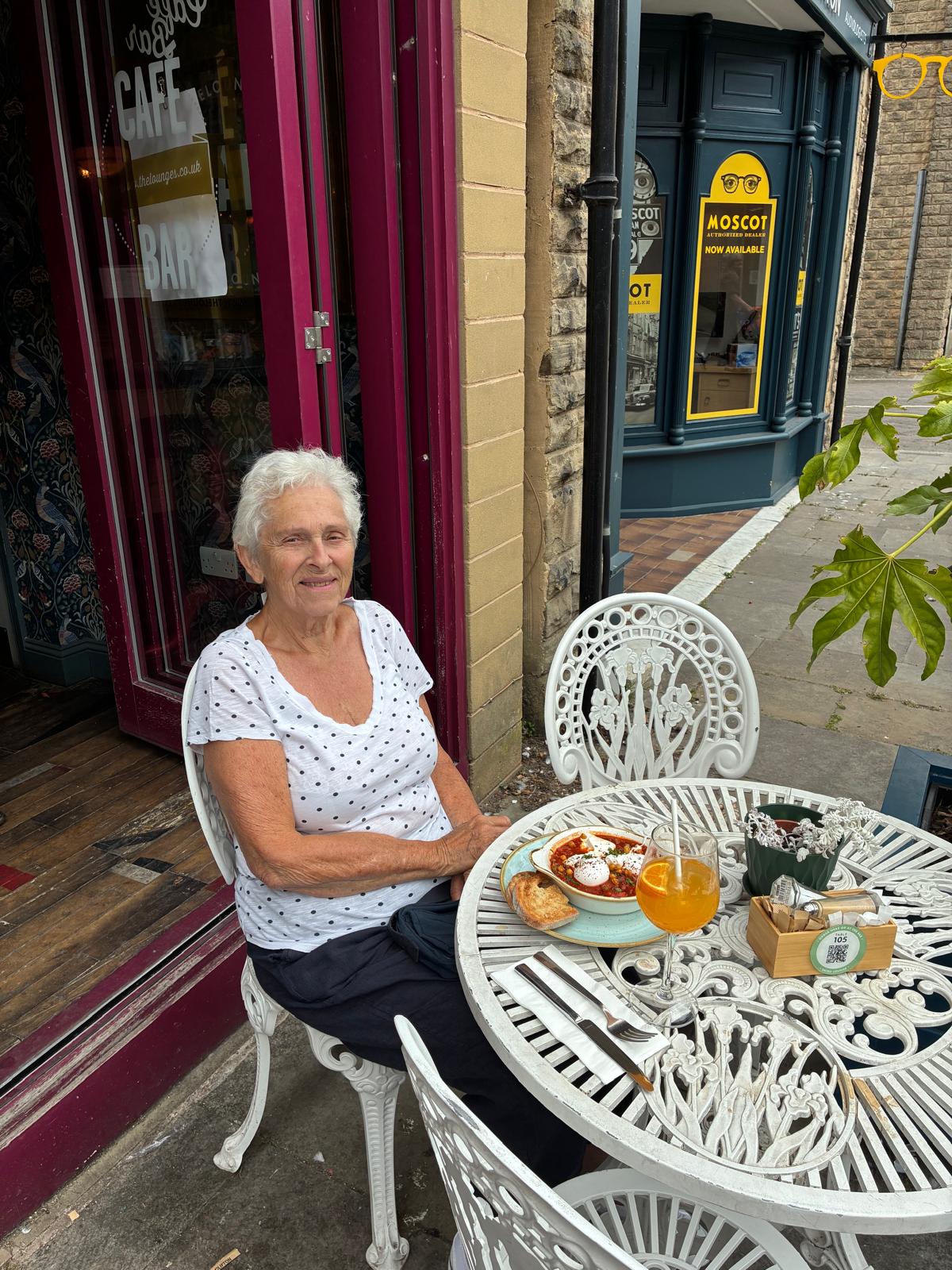
Enjoying a relaxed morning coffee — one of the simple pleasures pain-free life has given back.
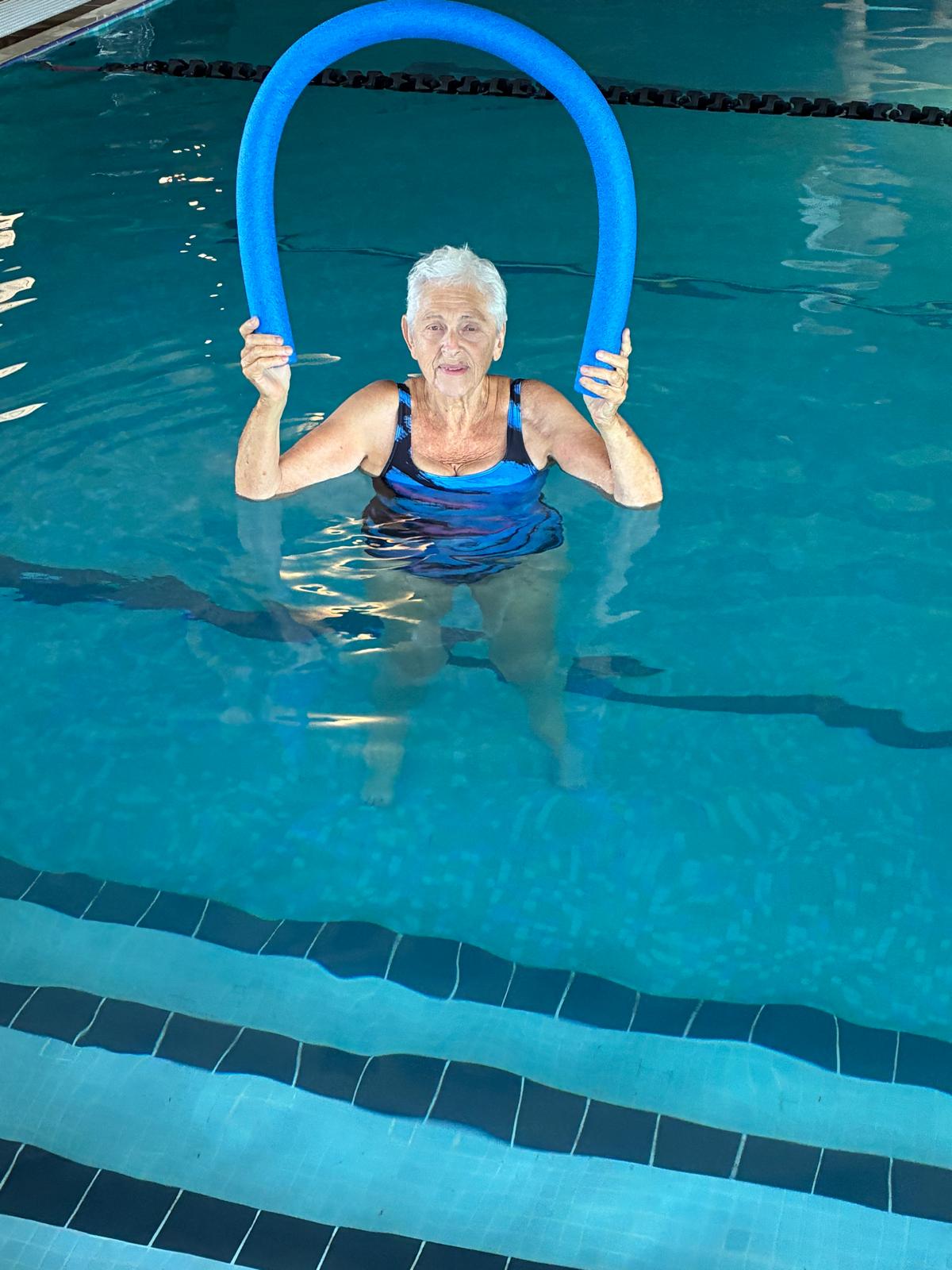
She’s back in the garden, moving her plants around. She’s back at Aquafit, which she says she “can’t overemphasise” for its role in her recovery. She’s off to the Buxton Opera Festival. And, tellingly, she recently moved back to her usual side of the bed — the side she’d swapped away from during recovery — a small domestic detail that speaks volumes about how far she’s come.
Hear From Sonia, In Her Own Words
Advice for Anyone Facing the Same Journey
Looking back, Sonia’s advice is practical and hard-won: talk to your physiotherapist and occupational therapist before surgery, not just after. “There’s no point in being handed leaflets the day after surgery when you’re coming out of an anaesthetic,” she says. Sorting out the practical details of a home in advance — from which side of the bed you sleep on to what you’ll be able to reach — makes the weeks that follow far more manageable.
But most of all, she credits having the right person alongside her. Asked what she’d say to Feroz if he were there, she doesn’t hesitate: “I love you.” She’s quick to explain what she means by it. “It was the respect and the care… he looked at me as the whole person… not [just] my shoulder.”
Six weeks in a sling, she says, is “a project” — a temporary one, with an end in sight. With the right support, patience, and a good dose of humour along the way, it’s a project you can finish stronger than when you started.